
Alan Watts – Alcoholic?
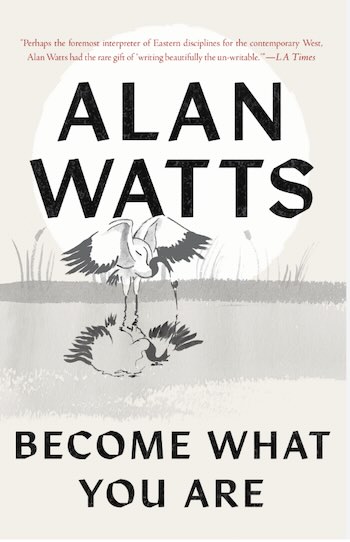
My mind was filled with the sound of Alan Watts on cassette tapes at the library at the University of South Florida – Tampa, Florida for a couple of years. I was there to listen to Spanish lessons on tape, but once I found Alan Watts and Joseph Campbell, Spanish was no longer important.
I was never the same again. I remember, the audio I listened to for hours opened my worldview and set me on a path of discovery. Discovery about what was inside my head. What was important. What I should focus on during life.
I read a number of Watts’ books and watched countless videos of his on YT. I love the way he spoke. I love the big picture he saw so easily.
Alan Watts taught a generation how to loosen its grip on the self, while quietly drinking himself into an early grave.
To the West, he sounded like a door opening. Zen. Taoism. Detachment. Ego death. A voice that could dissolve anxiety with a few sentences and make the whole identity project feel optional. Millions listened and felt something real shift.
But the man behind the microphone was coming apart.
Watts didn’t just drink. He drank constantly. Not as a social habit. As a dependency that followed him through lectures, recordings, retreats, and private life. People who knew him described a sharp, luminous mind that could explain freedom with surgical clarity, then vanish into addiction hours later. His marriages broke down. His family life took damage. The serenity was convincing in theory and wrecked in practice.
And the more famous he became, the louder the contradiction got.
He warned people not to follow gurus while being turned into one. He criticized Western materialism while living very comfortably off the lecture circuit. He spoke about non-attachment while struggling to manage his own impulses. The gap was there. Students sensed it. But most didn’t want to name it, because naming it would threaten what they were getting from him.
Watts named it anyway.
He said he wasn’t a saint. Not an example. Not enlightened. He didn’t claim to embody what he taught. He claimed to point at it. That admission is what keeps his work from collapsing into fraud. But it also exposes the harsher reality people don’t want to face.
Honesty is not the same as rescue.
He never fully stopped drinking. In 1973, Alan Watts died at fifty-eight.
The problem wasn’t hypocrisy.
It was honesty with no escape hatch.
It’s the uncomfortable lesson his life teaches more clearly than his lectures ever could
It’s that…
- insight doesn’t cure pain
- awareness doesn’t guarantee peace
- wisdom doesn’t protect you from the habits you can’t put down
In all that I read and heard from Alan Watts I never knew he had a problem with alcohol. It doesn’t surprise me at all, it’s just odd that I didn’t know. His lectures are so coherent, so brilliant in their simplicity.
If you’re struggling with something – alcoholism or anything that you cannot control that is hurting you, family, and friends – take care of it first. Make it your obsession. There are lots of behaviors that can pull us off track.